Wichita Plumbing Services

Sewer Line Repair in Wichita, KS

Sewer line repair in Wichita - camera-diagnosed laterals: roots in clay joints, bellies in shifted clay soil, and breaks from a century of service, repaired by the method the evidence supports.

The housing stock writes the third chapter. Wichita grew in eras, and each era plumbed differently: galvanized steel and cast iron with clay sewer laterals in the prewar core; copper supply and slab foundations in the postwar decades; plastic supply and drains in the newer suburbs, with water heaters cycling through all of it on their own shorter clocks. A plumber reading a Wichita house starts by reading its decade, because the decade predicts the pipes, the failure modes and the honest order of repairs.

Then there is the weather's direct line into the system. Spring storms drop rain faster than old laterals can carry it, low river-adjacent ground floods basements and asks sump pumps for their year's work in a weekend, and summer drought pulls the clay away from buried lines until the fall rains swell it back against them. Storm season, freeze season, drought season - Wichita plumbing runs on all three calendars at once, and the pages here are organized around exactly that.

Signs You Need Sewer Line Repair

Multiple drains backing up together

The whole house slowing or reversing at once means the restriction sits in the main line, past every branch - the lateral is describing itself, and it is the visit's first suspect.

Sewage in the lowest fixtures

Waste appearing in a basement tub, shower or floor drain is the line's final vocabulary for a downstream failure. Every flush after that adds to it; the household's water use stops until the line is read.

Gurgling toilets and drains after heavy use

Air displaced by a line running too full announces itself through the traps - the sound of a lateral whose open diameter is spoken for by roots, scale or a sag.

Wet, lush or sunken ground over the line's path

A patch of yard that stays green in drought, soggy in dry weeks or quietly sinking is a lateral leaking into its own trench - fertilizer included, courtesy of the house.

Backups that follow heavy rain

A line that fails when it rains is taking storm water in - through joints, cracks or a cross-connection - and drowning in a load it was never sized to carry.

A sewer smell in the yard or basement

Odor outside the house along the line's path, or inside at the floor drains, says the sealed system is open somewhere - a cracked section, a failed joint or a dried trap telling on its neighbors.

Why Sewer Line Repair Is a Standing Job in Wichita

Clay is Wichita's lateral material and its biography. Sectioned clay pipe served this city for a century, and its joints - mortared or gasketed in their eras - are where its story is told: the clay soil shifts, a joint opens a hair, moisture exhales, and a root arrives to widen the door from inside. The line rarely fails in its sections; it fails at its seams, in sequence, which is why camera footage of a Wichita lateral reads like a tour of its joints.

Soil is the second author. The county's expansive clay breathes with the weather - swelling against the line in the wet spring, shrinking away in the drought summer - and a lateral lives its whole life being squeezed and released by the ground it lies in. Bellies form where support leaves; offsets grow where the swell wins. This is why two identical lines on the same street can age so differently: the ground under them kept different rhythms.

Repair method follows the footage. A sound line with root intrusion may be managed by cutting and a joint repair; a settled belly wants the section re-laid at grade; a failed run wants replacement - by open trench where the yard allows, by trenchless methods where surface, depth and soil suit them. The method menu is real, and the camera's evidence - how much of the line, in what condition, under what surface - is what chooses from it honestly.

Sewer Line Repair Through the Wichita Year

Summer splits in two: the storm tail of June, when the last big rains finish the season's argument with the drains, and the long bake that follows. In the bake, the clay soil dries and shrinks away from buried laterals, opening joints that will drink the fall rains; irrigation systems run daily and expose every weak backflow and split lateral line; and water heaters work their steadiest hours supplying the season's showers and laundry. A leak in summer is a water bill discovered in August.

Spring is storm season in Wichita, and it is plumbing season too. From March into June, heavy plains rain tests every drain and lateral in the county: sump pumps run for days on the low ground, older sewer lines surcharge where storm water finds its way in, and the basement fixtures of river-adjacent neighborhoods learn where they stand relative to the street sewer. Spring is also when winter's hidden damage declares itself - the line that froze and split behind a wall, weeping quietly since January.

Wichita winters swing: mild weeks, then an Arctic front that parks single-digit cold over the plains for days. Pipes in exterior walls, crawl spaces and unheated garages freeze in rough order of their exposure, and the burst usually announces itself at the thaw, not the freeze. The holiday weeks load the other half of the system - disposals, dishwashers and guest-bathroom drains at their annual maximum. Winter plumbing is triage: stop the water, then read what the cold actually did.

Sewer Line Repair in Depth

A sewer lateral is best understood as a document the property keeps about itself: its materials date the house's eras, its repairs record its crises, its camera footage is the current edition. Owners who keep that document - footage, scopes, dates - own the property's most expensive unknown as a known quantity, and every future decision about the line prices from fact instead of dread.

The repair choice also deserves its reputation as a fork in the property's road. Spot repairs preserve capital and defer the larger reckoning; full renewal resets the line's clock for the next generation of the house. Neither is the honest answer in the abstract - the footage, the surface above the line and the owner's horizon are the three witnesses, and the repair worth buying is the one all three were heard on.

Choosing the Right Help

Choose the sewer provider by the evidence standard: camera first, footage shown, method matched to findings, finished line re-camerad and the record left with the property. Sewer work is bought blind more easily than any other trade - the discipline of refusing scopes written without footage is the owner's whole protection, and it costs nothing to insist on.

The Ground and Water Behind It

Start with the water itself. Wichita's municipal supply - drawn from Cheney Reservoir and the Equus Beds aquifer - arrives hard, carrying a mineral load that precipitates out wherever water is heated or left standing. Scale builds inside water heaters, narrows old galvanized lines, crusts faucet aerators and shower heads, and shortens the life of every appliance valve in the house. Plumbing in Wichita is therefore never just about pipes; it is about what the water does to them, year after year.

The ground is the second author of Wichita plumbing. Much of Sedgwick County sits on expansive clay that swells when wet and shrinks in drought, and that slow breathing moves everything buried in it: sewer laterals sag and separate at the joints, service lines flex at their fittings, and slab foundations transmit the motion to the pipes inside them. Add the freeze-thaw winters, when shallow lines and unheated crawl spaces meet single-digit nights, and the county's buried plumbing works harder than the plumbing itself ever planned to.

How Sewer Line Repair Works

Camera the line before scoping

The inspection runs the lateral's full length where access allows, locating and recording every intrusion, belly, offset and break - the repair is designed from this footage.

Clear what clearing can cure

Where blockage is the disease, the line is cleared and re-camerad, so the repair scope is drawn on a clean line's true condition.

Choose the method from the evidence

Spot repair, section replacement, full replacement, trench or trenchless - the footage, the depth and the surface above the line decide, and you see the reasoning.

Prove the finished line

The repaired run is camera-verified and flow-tested, and you receive the record - the property file's most valuable plumbing document.

Doing It Yourself vs a Professional

The DIY Route

  • Renting a cable and clearing a backup without a camera leaves the cause in the ground and the household calendar set by its return
  • Digging for a lateral whose location you are guessing at finds, in rough order, the gas line's neighborhood, the water service and eventually the sewer - a locate and a camera are cheaper than the tour
  • Pouring root killer into a shifted or broken line treats the symptom in a pipe whose problem is geometry
VS

The Professional Route

  • Cameras before quoting, and shows you the footage - roots, belly, break - rather than narrating it from the driveway
  • Scopes the method to the evidence: spot, section or full run, trench or trenchless, with the reasons stated
  • Verifies the finished line on camera and leaves the record with the property

Keep It From Coming Back

A repaired lateral is a new chapter in an old document. These habits keep the chapter long - protecting the joints, the grade and the record the repair created.

  • Keep the camera record from any sewer work with the house papers; it is the baseline every future diagnosis compares against.
  • Treat the first whole-house slowdown as the lateral introducing itself - read early, while the menu still includes managing rather than replacing.
  • Know where your cleanout is and keep it reachable; the camera and the cable both enter there, and buried cleanouts tax every visit.
  • Be deliberate about what enters the line - grease and wipes load a compromised lateral exactly where it can least afford it.
  • After buying an older Wichita home, a sewer camera inspection in the first year is the soundest certainty the purchase offers.
Sewer Line Repair in the Surrounding Communities

The communities around Wichita share its water, its clay and its freeze-thaw winters - with their own twists of housing era, slab construction and well-and-septic edges.

Sewer Line Repair in Clearwater

Clearwater is a small railroad-era city southwest of Wichita on the Chikaskia River, with a historic downtown and a mix of older homes and new subdivisions drawing commuters to the metro. Its older streets keep plumbing as old as the town; its edges run wells, septic systems and long rural lines.

Sewer Line Repair in Mulvane

Mulvane is an old railroad town south of Wichita on the Arkansas River, with a preserved Main Street and depot, newer growth near the Kansas Star Casino, and a strong small-city identity. The river's low ground frames the town - and keeps its basements, laterals and sump pumps busy.

Sewer Line Repair in Rose Hill

Rose Hill is a growing Butler County town southeast of Wichita, where newer subdivisions and acreage homes have spread around its schools. It draws families who want country space within commuting range - and its plumbing splits between new subdivision systems and farmstead wells and septic lines.

Sewer Line Repair in Bel Aire

Bel Aire is a growing city on Wichita's north edge, built around lakes, parks and newer subdivisions along the K-254 corridor. It has grown from a small community into one of the metro's active family suburbs, plumbing each new street as it goes.

Where Sewer Line Repair Is Needed Most

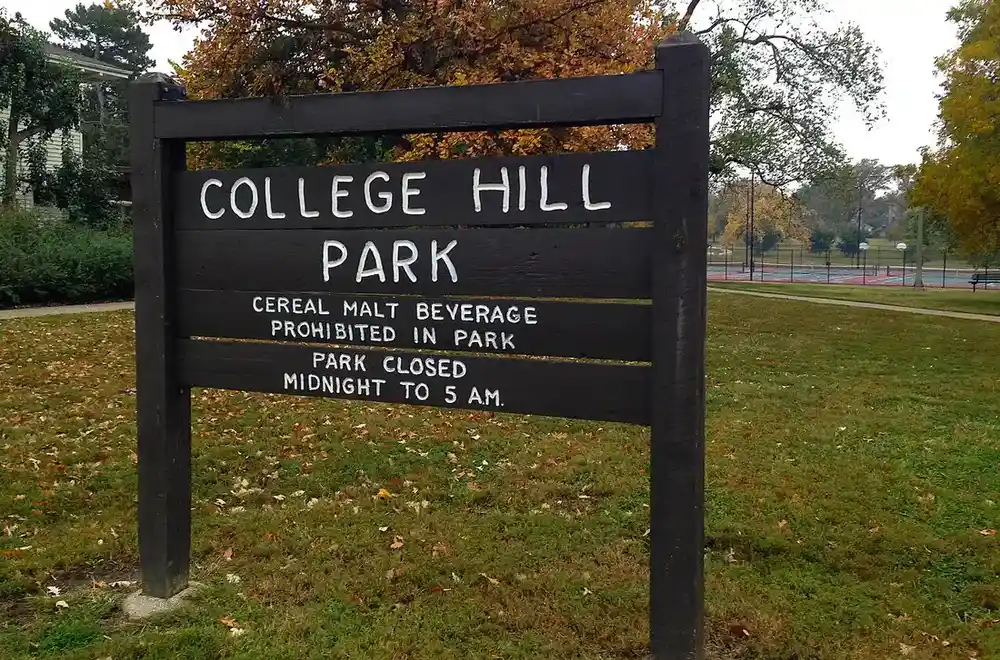
In the historic core and the east side - Riverside, College Hill, Eastborough, Downtown Wichita, Old Town and Delano, Midtown, South Wichita, Planeview, Oaklawn - the pipe stock runs from Wichita's oldest galvanized and clay to the boom-decade copper of the postwar subdivisions, and sewer line repair follows that record: century-old systems in the core, mid-life stock in the subdivisions, and hard water working on all of it at the same rate.

Across the east and west growth sides and the north side - East Wichita, Northeast Wichita, Uptown Wichita, West Wichita, Southwest Wichita, Auburn Hills and North Wichita, Benjamin Hills, Northwest Wichita, Derby, Andover, Haysville - sit the slab subdivisions of the 1970s onward, the growth-edge neighborhoods and the second-generation systems now reaching their first renewals, which together make this the steadiest sewer line repair territory in the city.

Beyond the city line, the same work runs in Clearwater, Mulvane, Rose Hill, Bel Aire, Park City, Valley Center, Kechi, Maize, Goddard, Newton, Hutchinson - railroad towns, fast-growing suburbs and county-seat communities where acreage wells, septic systems and small-city pipe add their own chapters. Every one of these area pages carries the local detail for sewer line repair in that community.

Coverage, In Full

Sewer Line Repair runs across the whole service map: Riverside, College Hill and Eastborough; Downtown, Old Town, Delano and Midtown; East Wichita, the northeast growth edge and Uptown; South Wichita, Planeview and Oaklawn; the west side, Southwest Wichita and Auburn Hills; North Wichita, Benjamin Hills and Northwest Wichita; and beyond the city in Derby, Andover, Haysville, Clearwater, Mulvane, Rose Hill, Bel Aire, Park City, Valley Center, Kechi, Maize, Goddard, Newton and Hutchinson. One call covers all of it - the local pages above carry the detail for each. If your street is not named here, call anyway: routes grow with demand, and most Sedgwick County addresses are already within reach of a scheduled run.

From the Wichita Plumbing Guides

Sewer Lines in Older Wichita Homes: Clay, Roots and the Camera

Older Wichita homes drain through clay tile or cast-iron laterals whose sections are sound but whose joints - opened by decades of expansive-clay movement - admit the roots that do the visible damage. The failure sequence is almost always: joint opens, moisture escapes, root arrives, blockage builds. Clearing treats the last step; the camera reads all four and tells you which step your repair dollar belongs to.

Read the Guide

Sump Pumps and Storm Season: A Wichita Basement Readiness Guide

A sump system is four parts with one job: the pit collects, the pump lifts, the check valve holds the lift, and the discharge delivers the water somewhere it stays. A failure in any one is a system failure. The storm that floods basements is the same storm that cuts power - which is why a lone plug-in pump is a plan with a scheduled hole in it. Battery or water-powered backup, tested, is the difference between a system and a hope.

Read the Guide

What Drives the Cost of a Plumber in Wichita?

Plumbing prices are scope wearing a number: the same named job - a leak, a clog, a heater - spans a wide range because the underlying situations differ in access, condition, footage and code work. The factors that move a Wichita quote are knowable in advance: what failed and in what material, how reachable it is, how much of the system the honest scope includes, and what the ground, the slab or the wall asks of the crew.

Read the Guide

Sewer Line Repair Questions

How long do Wichita sewer laterals last?

Clay and cast iron are long-lived materials abused by a moving soil: sound sections serve for many decades, and the system's life is usually decided at its joints - by roots, shifts and bellies rather than by the pipe wall itself. The camera's joint-by-joint record is the only honest age statement a lateral gets.

Are tree roots really the main problem?

They are the most photogenic one. Roots exploit openings; they rarely create them in sound pipe. The opening comes first - a shifted joint, a cracked hub - and the root is the opportunist that turns a defect into a blockage. Repairs that evict roots without addressing the opening are scheduling the sequel.

What is a belly, and can it be fixed without replacement?

A belly is a sag where the line holds water permanently, settling solids and narrowing itself between clearings. Minor bellies are managed and monitored; a working cure means restoring grade, which means replacing that section. The camera measures the belly's length and depth, and that measurement - not optimism - decides.

What affects the cost of sewer line repair in Wichita?

How much of the line is affected, its depth, what lies above it - lawn, driveway, mature trees, street - the method the evidence supports, and the soil's mood in the week of the work. A two-foot spot repair and a full lateral replacement share a name and nothing else; the footage is what tells you which one your yard is holding.

How do I know if my sewer line in Wichita needs repair or just cleaning?

The camera knows. A sound line with a soft blockage cleans and stays clean; a line with roots at a joint cleans and re-roots on a schedule; a bellied or broken line cleans and re-fails on a shorter one. The symptom at the sink cannot tell these apart - which is why the inspection, not the clearing, is the diagnostic event.

What does a sewer camera inspection actually show in Wichita?

The line from inside, joint by joint: root masses and the seams they entered, standing water where a belly has formed, offsets where sections have shifted, cracks and collapses, and the line's material and depth changes along its run. It converts the lateral from a rumor under the yard into a documented asset with named conditions - the difference between scoping a repair and guessing at one.

Can a sewer line be replaced without digging up my whole Wichita yard?

Sometimes - trenchless methods can renew a line through small access points where the old pipe's path, depth and condition allow them to work. Where the line has collapsed, bellied badly or runs shallow under hardscape, open excavation remains the honest method. The camera footage and the surface together decide; be wary of anyone who promises trenchless from the doorbell.

Why does my sewer act up every time it rains hard in Wichita?

Because storm water is entering a line sized for sewage. Open joints and cracks drink groundwater when the water table rises; some older connections take roof or area drainage directly. The line drowns in the extra load and the house backs up - a pattern whose cure is sealing the entries, which the camera locates one by one.

Please note: Wichita Plumbing Pros is an independent directory and referral service, not a plumbing contractor. The professionals reachable through this site are independent businesses; any agreement for work is between you and the professional you engage. Service information on this site is general educational material - the scope of any real plumbing work is set by an on-site inspection.

A Burst Pipe, a Backed-Up Drain or a Water Heater Gone Cold?

One call connects you with a plumbing professional serving Wichita and the surrounding communities - diagnosis, repair and a clear scope before work starts.

📞 Call Now
📞 Call Now