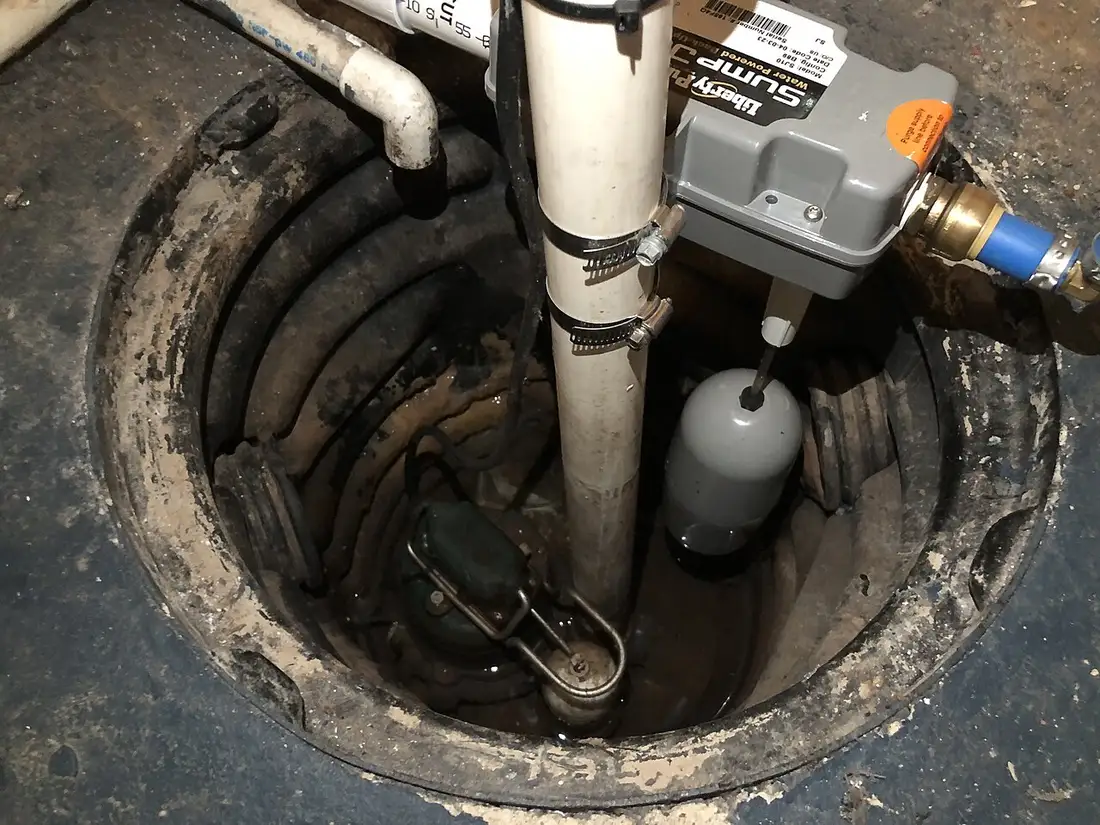
A sump system is four parts with one job: the pit collects, the pump lifts, the check valve holds the lift, and the discharge delivers the water somewhere it stays. A failure in any one is a system failure.
Problem: A sump system is four parts with one job: the pit collects, the pump lifts, the check valve holds the lift, and the discharge delivers the water somewhere it stays. A failure in any one is a system failure.
Solution: The storm that floods basements is the same storm that cuts power - which is why a lone plug-in pump is a plan with a scheduled hole in it. Battery or water-powered backup, tested, is the difference between a system and a hope.
When to call: Readiness is a spring ritual: pour-test the pump, watch a full cycle, check the battery's date, walk the discharge to daylight. Twenty minutes in April is the whole premium on a dry May.
Wichita's storm season is not a metaphor: the spring sky here delivers rain in volumes that find every weakness in a basement's defenses, often in a single night, and frequently with the power flickering as it works. Against that night stands the sump system - a pit, a pump, a valve and a pipe - asked to perform flawlessly after months of idleness, in the dark, unobserved. This guide explains how the system works, the specific ways each part fails, and the readiness ritual that converts it from a hope into a tested defense before the season opens.
The Wichita Angle
The ground is the second author of Wichita plumbing. Much of Sedgwick County sits on expansive clay that swells when wet and shrinks in drought, and that slow breathing moves everything buried in it: sewer laterals sag and separate at the joints, service lines flex at their fittings, and slab foundations transmit the motion to the pipes inside them. Add the freeze-thaw winters, when shallow lines and unheated crawl spaces meet single-digit nights, and the county's buried plumbing works harder than the plumbing itself ever planned to.
The system, part by part
The pit is the collector: a basin set at the basement's low engineering point, fed by the drain tile that rings the foundation's footings. Ground water and storm-driven water rise in the tile, spill into the pit, and lift the float as they fill it. The pit's size and the tile's condition set the system's tempo - a big inflow on a river-adjacent lot can fill a pit in minutes on the worst night, which is why pump sizing is measured against that night and not against the pit's polite behavior in October.
The pump is the lift: a submersible motor driving water up the discharge pipe when the float switch commands it. The check valve, at the pipe's base, is the unsung third part - it refuses the lifted column's return when the pump stops, so each gallon is pumped once. The discharge is the verdict: a pipe that carries the water clear of the foundation to ground that keeps it. Every part is simple. The system is the choreography, and the failures below are all choreography failures - parts that aged out of the dance during the idle months nobody watched.
How sump systems actually fail
The float switch fails first and commonest: glued by the pit's sediment, tangled in its own cord, worn at its pivot after a decade of cycles. The motor may be perfect; an uncommanded pump is a sculpture. The check valve fails second, quietly - the pit refills from its own discharge column, the pump cycles on the same water, and the wear accelerates toward the storm. The discharge fails by blockage and by frost: a crushed or buried outlet, a line frozen at its exit during the February thaw, each turning the pump into a machine for filling its own pit.
Then there is the failure with no part at all: the outage. The storm that delivers the water delivers the wind that takes the lines down, and the basement's busiest hour arrives in the dark with the pump unplugged by the sky. Battery backups exist precisely for this correlation, and their own failure mode is pure calendar - the battery that was never checked, its charge spent two summers ago. Every failure on this list is detectable in April with a bucket of water and twenty minutes, which is the most damning thing about all of them.
PROBLEM
→
SOLUTION
The readiness ritual and the layered defense
The ritual is deliberately small. Pour water into the pit until the float fires; watch the pump empty the pit against the check valve; watch it stop; watch the pit for the refill that would convict the valve. Exercise the backup the same way, with the main pump unplugged, and read the battery's date the way you would read a milk carton. Walk the discharge to its daylight end and confirm it is open, intact and aimed at ground that slopes away. Log the date. Repeat in the calm of each spring, and glance again whenever a storm week is forecast.
The layered defense is the ritual's structural twin: a primary pump sized to the worst night, a backup on a maintained battery or the city's pressure, an alarm that speaks for the system when it cannot cope, and a discharge with somewhere honest to go. No single layer is exotic; the dry basement is their combination. Owners of finished basements in the river's old floodplain or the creeks' low lots should hear the plain version: for your address, the layers are not upgrades. They are the system, specified correctly at last.
The Pit's Diary: What Cycle Times Confess
A sump pit keeps a diary in cycle times, and storm season is when it publishes. A pit that cycles every twenty minutes in April's rains and every four in June's is reporting the water table's season. A pit whose cycles suddenly shorten in dry weather is confessing a new author - a check valve returning its lift, an irrigation leak next door, a service line weeping toward the tile. Owners who know their pit's normal rhythm own a sensor network of one, exquisitely placed, and its readings precede every basement surprise by days.
The diary is worth writing down, literally: the date of the season's first cycle, the storm that set the record interval, the battery's birthday. Basements flood on the difference between the pit's history and the owner's memory of it, and memory, in a dry August, always testifies that the pit was never a problem.
When the Pit Is Not Enough: The Honest Limits
There are Wichita lots where the water's ambition exceeds any pump's: the floodplain's edge in a record spring, the creek lot in the storm that rewrites the maps. The honest guide says so, because a sump system is a defense against ground water's ordinary ambitions, not against the river's extraordinary ones. Owners on those lots hold a different portfolio: the layered system, yes, and also raised storage, water-tolerant finishes at the basement's low rooms, and documents and valuables living above the line the water has already demonstrated it can reach.
Knowing which lot you own is itself a readiness act: the flood maps, the neighbors' histories, the pit's own diary across the seasons. The system specified for the ordinary lot and the system specified for the ambitious one differ by exactly the honesty of that classification - and storm season grades the classification, not the intention.
Myth vs Fact
The Myth
If the sump pump is running, the basement is safe. The hum from the pit sounds like protection itself, and owners sleep to it through the whole storm season.
VS
The Fact
A running pump proves a motor turns - nothing about capacity, discharge or the next outage. The pit can be filling faster than the lift, the discharge can be returning its water, and the storm that matters most is the one that cuts the power the hum depends on. The system's safety lives in its layers and its test dates, not in its soundtrack.
The Related Service, In Depth
The sump system is the basement's immune system, and it shares the immune system's essential trait: its work is invisible when it succeeds. Nobody admires a dry basement in a May storm; nobody photographs the pit cycling calmly. The discipline of sump ownership is therefore entirely calendrical - tests performed when nothing is wrong, batteries replaced while they still hold charge - faith maintained in a device whose triumph is that nothing happened.
That is the service side of this guide's subject. When you are ready, the Sump Pump Services page carries the process, the coverage by neighborhood and the number to call.
The Process, Step by Step
Pour-test before the season
Water into the pit until the float fires. Confirm start, empty, stop - the full cycle, watched once with your own eyes.
Test the backup in anger
Unplug the primary and repeat the pour test on the backup alone. Read the battery's date and its charge indicator while you are there.
Walk the discharge
From pit to daylight: pipe intact, check valve holding, outlet open and clear, exit ground sloping away from the foundation.
Log it and calendar it
Write the test date where the household keeps its records, and put next spring's test on the calendar now - the ritual works because it repeats.
Prevention Checklist
Keep the pit covered and clear; the stored clutter that migrates to basement corners jams floats with silent reliability.
Replace the backup battery on its printed calendar life, not on evidence - its failure is scheduled for a storm night by definition.
Never run the pump dry to test it; the pour test exists because the motor needs its water. Buckets are the method.
Route roof water away from the foundation with downspout extensions - every gallon the gutters deliver to the pit is a gallon the system must lift.
Know your pit's personality: how fast it fills in a hard rain, how long the pump rests between cycles. The owner who knows the normal hears the abnormal in time.
A Field Checklist for Your Own Home
Pour-test the full system each spring
start, empty, stop, check valve holding, watched by a human.
Exercise the backup under load and read its battery's date aloud; replace on the calendar, not the failure.
Walk the discharge to daylight
intact, open, aimed at ground that keeps the water.
Log the test and the pit's observed rhythm; next year's readiness starts from this year's record.
What the Paperwork Should Show
Readiness spending has a defensible order: the tested primary first, the backup second, the alarm third, capacity beyond the observed worst night fourth. Owners sometimes invert the order - buying capacity while the float switch that commands it is nine years old - and the storm grades the inversion without appeal. The order's logic is the failure list's logic: the commonest failures are the simplest to retire, and each layer's price is trivial beside the floor it protects.
The scope conversation should also include the water's other doors: downspouts discharging at the foundation, grade that has settled toward the house, window wells without drains. The sump is the last line of a defense that begins at the gutters, and a readiness visit that prices only the pit has read only the last page of the story.
How a Professional Works This Problem
A professional readiness visit tests the system as a system: the pour test run and watched, the check valve's hold proven, the backup exercised under load with its battery's date read aloud, the discharge walked to daylight, and the pit's inflow judged against the pump's capacity for the lot's worst night. The owner receives the test's results and the ritual's calendar in writing - the difference between a system that was inspected and a basement that was lucky.
Mistakes That Make It Worse
Testing the pump by running it dry, or not testing it at all because it 'ran fine last year.'
Letting the backup battery age past its printed life on the theory that it still shows a charge light.
Discharging the pit's water against the foundation and pumping the same gallons on a loop.
Skipping the alarm because the first two layers feel sufficient - the alarm is the layer that speaks.
The Bottom Line
Storm season grades sump systems the way it finds them: tested or hopeful. The difference is twenty minutes with a bucket in April, a battery honored on its calendar, and a discharge walked to daylight. Wichita will provide the exam every spring without fail. The readiness ritual is how a household stops cramming for it in the dark.
Mercaptan - the rotten-egg odor added to natural gas - is the alarm: if you smell it strongly, or hear gas hissing, leave the house without touching switches or phones inside, and call the utility or 911 from outside or a neighbor's house.
One slow fixture means the problem lives in that fixture's trap or branch. Every fixture slowing, gurgling or backing up together means the building drain or the sewer lateral - a different address and a different visit.
Against the pit's worst night, not its average: watch a heavy rain's cycle - if the pump empties the pit and rests, it is keeping pace; if it runs continuously while the pit's level holds or climbs, the inflow is winning and capacity is the conversation. Sizing also counts the discharge's lift and length. The honest measure is a storm watched once, with the conclusion written down before the calm makes you forget it.
My pump runs every few minutes even without rain. Is that normal?
It is a clue with three usual authors: a check valve returning each lift to the pit, ground water genuinely feeding the tile - common on low and river-adjacent lots - or a discharge emptying where the soil walks it back to the foundation. Time the cycle, then watch whether the pit refills from below or from its own pipe's return; the two look identical from above and diagnose entirely differently.
Battery backup or water-powered - which suits Wichita?
Both defend the outage; they differ in their dependencies. Battery units are independent and strong but live and die by the battery's calendar. Water-powered units sip the city's pressure - elegant, maintenance-light, and sensible where pressure is robust, at the cost of spending treated water during the event. Lots with chronic inflow lean battery-and-alarm; modest pits with strong pressure wear either well. The indefensible option is neither.
The power went out and my basement flooded anyway. What now?
Dry aggressively and document first - the claim and the mold both respect speed. Then convert the event into the specification it should have been: the backup layer fitted, the alarm added, the ritual calendared, and the pit's behavior in that storm recorded as the sizing evidence it now is. A flooded basement is tuition; the only waste is paying it twice.
Please note: Wichita Plumbing Pros is an independent directory and referral service, not a plumbing contractor. The professionals reachable through this site are independent businesses; any agreement for work is between you and the professional you engage. Service information on this site is general educational material - the scope of any real plumbing work is set by an on-site inspection.
A Burst Pipe, a Backed-Up Drain or a Water Heater Gone Cold?
One call connects you with a plumbing professional serving Wichita and the surrounding communities - diagnosis, repair and a clear scope before work starts.