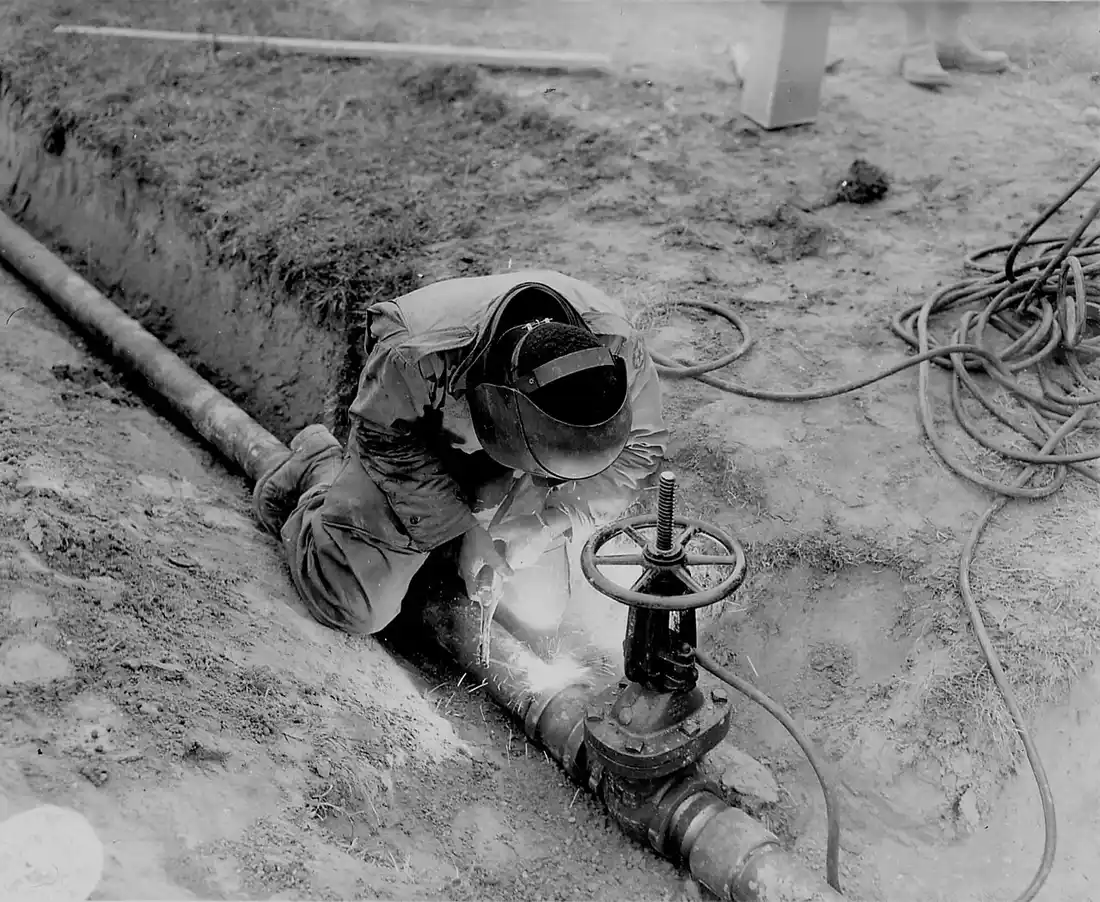
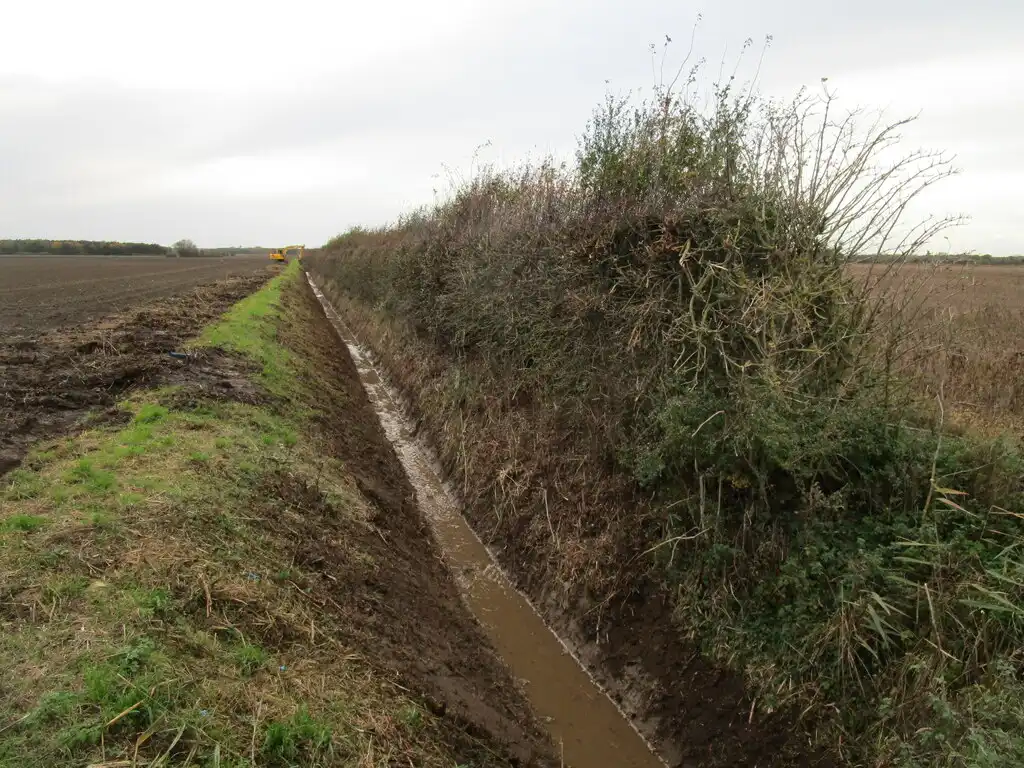
Older Wichita homes drain through clay tile or cast-iron laterals whose sections are sound but whose joints - opened by decades of expansive-clay movement - admit the roots that do the visible damage.
Problem: Older Wichita homes drain through clay tile or cast-iron laterals whose sections are sound but whose joints - opened by decades of expansive-clay movement - admit the roots that do the visible damage.
Solution: The failure sequence is almost always: joint opens, moisture escapes, root arrives, blockage builds. Clearing treats the last step; the camera reads all four and tells you which step your repair dollar belongs to.
When to call: Decision order that protects owners: camera before scope, evidence before method, and keep the footage - it is the property's sewer biography and the baseline for every future call.
Stand in a College Hill or Riverside basement and you are standing over infrastructure from another century: a clay or cast-iron lateral that has carried the house's waste through a hundred Kansas wet-dry cycles, under soil that swells and shrinks against it the whole time. These lines do not fail the way modern pipe fails. They fail at their seams, in sequence, with the assistance of every street tree the neighborhood ever planted. This guide explains the system an older Wichita home actually drains through, the way its failures unfold, and the diagnostic discipline that keeps owners from buying the wrong fix.
The Wichita Angle
Start with the water itself. Wichita's municipal supply - drawn from Cheney Reservoir and the Equus Beds aquifer - arrives hard, carrying a mineral load that precipitates out wherever water is heated or left standing. Scale builds inside water heaters, narrows old galvanized lines, crusts faucet aerators and shower heads, and shortens the life of every appliance valve in the house. Plumbing in Wichita is therefore never just about pipes; it is about what the water does to them, year after year.
What is actually under the yard
The lateral is the house's private sewer: the pipe from the foundation to the city's main, typically under the front or side yard, laid at a gentle grade that a century of soil movement has been editing ever since. The materials are era-marked. Clay tile, in short sections with bell joints, serves the oldest stock; cast iron takes over in the postwar decades; Orangeburg - a fiber pipe with a finite life - appears in a mid-century window and is always a finding; PVC arrives with the later suburbs and changes the conversation entirely.
The soil is the second fact. Wichita's expansive clay breathes with moisture - rising against the pipe in the wet spring, shrinking from it in drought - and a sectioned line laid in that soil is a string of joints being worked, gently and forever, by the ground itself. Nothing about this is a defect in the original work: the line was built to the standards of its day and has out-served most of them. But its failure mode is written into the arrangement: the sections endure; the joints are where the century collects its fee.
The failure sequence, and why clearing is not curing
It begins with geometry: a joint opens a fraction as the soil works it. The open joint exhales moisture into the surrounding soil, and moisture in a dry matrix is a signal every root in the yard is equipped to read. The root arrives as a hair, thickens on the nutrient stream the line obligingly provides, and becomes a net that catches the solids the line carries. The household meets the story at its final chapter - the backup - and the clearing that follows evicts the net while leaving the door it entered by standing open.
This is why the honest question after any older-home backup is never 'is it clear?' but 'what did we learn?' A sound line with a one-time obstruction is a closed case. A line whose joints host roots is a managed case - clearing on an interval, possibly with a joint repair. A line whose sections have shifted, bellied or collapsed is a structural case that clearing can only rent time on. The three cases wear identical symptoms and have nothing else in common, and sorting them is a camera's work, not a cable's.
PROBLEM
→
SOLUTION
The camera, and the decisions it disciplines
A sewer camera reads the lateral the way this guide has described it: joint by joint, in its own light. It shows the root masses and the seams they entered, the bellies holding their permanent ponds, the offsets where sections have stepped apart, the cracks and the material changes along the run. Run after a clearing, it reads the line's true condition with the blockage's camouflage removed - which is why the inspection sequence is clear first, camera second, scope third, in that order, or the evidence is compromised.
The decisions the footage disciplines are the expensive ones. Spot repair is honest where one joint has failed in a sound line. Section replacement answers a belly or a shifted stretch. Full replacement - trench or trenchless, chosen by depth, surface and the old line's path - retires the whole biography when the biography is the problem. Bought from footage, any of these is a rational scope. Bought from a symptom, each is a wager, and the yard keeps the stakes either way. The final discipline is archival: keep the footage with the house papers. It is the baseline every future plumber, buyer and insurer will thank you for.
The Street Tree Bargain, Stated Plainly
Every mature Wichita street is a bargain between the canopy and the clay pipes beneath it, and the bargain's terms are not secret: the oaks and elms that make College Hill worth walking are prospecting, root tip by root tip, for the moisture your lateral exhales at its joints. Owners sometimes experience this as betrayal - the beloved tree attacking the house - but the tree is only reading the signal the line broadcasts. Seal the signal, at the joints, and the tree's interest wanders back to honest soil water.
This is why the modern repair of an old lateral is as much about the next fifty years as the last hundred: new joints are gasketed and sealed in ways the originals never were, and a renewed line in a rooted street is not naive - it is a line that has stopped advertising. The street keeps its canopy, the house keeps its drainage, and the bargain's terms finally favor both parties.
Buying an Old House: The Sewer Clause
The older Wichita home purchase has one inspection that outperforms its price more than any other, and it is the sewer camera. The roof shows its age from the street, the furnace dates itself on a label - but the lateral's condition is invisible to every sense the buyer owns, and its repair prices run at the scale of the transaction's other big numbers. A pre-purchase camera converts the largest unknown in the deal into a document both parties can price.
Sellers of well-kept older homes have learned to offer the footage unprompted, the way they offer the roof's age - and buyers should learn to read its absence accordingly. The line that has never been looked at is not a sound line; it is an unread one, and in clay country, unread is a price category of its own.
Myth vs Fact
The Myth
Tree roots crack sewer pipes - a healthy line is safe from them. It makes the tree the villain and the owner a victim of landscaping, a comfortable story for everyone but the pipe.
VS
The Fact
Roots exploit openings; they rarely create them in sound pipe. The joint shifts first - soil movement, age, a fraction of an inch - and the root follows the moisture through the gap, then thickens into the blockage. Repairs that evict roots without sealing the opening are scheduling the sequel, usually within a few seasons.
The Related Service, In Depth
A sewer lateral is best understood as a document the property keeps about itself: its materials date the house's eras, its repairs record its crises, its camera footage is the current edition. Owners who keep that document - footage, scopes, dates - own the property's most expensive unknown as a known quantity, and every future decision about the line prices from fact instead of dread.
That is the service side of this guide's subject. When you are ready, the Sewer Line Repair page carries the process, the coverage by neighborhood and the number to call.
The Process, Step by Step
Note the symptom pattern
Whole-house slowness, seasonal backups, rain-linked failures - write down what happened and when. The pattern is half the diagnosis before anyone arrives.
Clear, then camera
If the line is blocked, clear it first so the camera reads structure, not contents - then run the full lateral where access allows and record everything.
Scope from the footage
Classify every finding: intrusion to manage, joint to repair, section to replace, run to renew. The repair menu follows the classification, not the calendar.
File the record
Footage, scope and dates go in the house papers. The next decision - yours or a buyer's - starts from this file instead of from a fresh rumor.
Prevention Checklist
After any backup in an older home, budget the camera with the clearing - the pair together cost less than either repeated alone.
Know your cleanout: its location, its cap's condition, its accessibility. Every sewer tool enters there, and a buried cleanout taxes every visit.
Watch the yard over the line's path: lush stripes in drought, soggy patches in dry weeks, a settling trench - the surface reports the line before the drains do.
If you buy an older Wichita home, put a sewer inspection in the first year's calendar; it is the purchase's largest unknown, retired for the price of a look.
Be kind to a known-compromised line: grease and wipes load it exactly where its diameter is already spoken for.
A Field Checklist for Your Own Home
After any backup
clear, then camera, then scope - in that order, with the footage kept.
Locate and expose the cleanout; every future visit is cheaper through a known door.
Read the yard quarterly over the line's path
lush stripes, damp patches, settling ground.
On buying an older home, schedule the sewer camera inside the first year - or inside the purchase.
What the Paperwork Should Show
Management is a legitimate scope for the older lateral, and it deserves its honest arithmetic: a line with known joint intrusion, cleared and camera-checked on an interval, can serve for years at a fraction of renewal's cost - provided the interval is kept and the footage is compared visit to visit. Management fails only when it becomes amnesia: clearings without cameras, intervals that stretch, a line whose decline goes unread until it graduates itself.
Renewal's arithmetic runs the other way: its price buys the joints' silence for a generation and retires the management calendar entirely. Between the two scopes, the deciding witness is the footage's trend - stable findings argue management; progressing findings argue renewal - which is why the archive, again, is the asset.
How a Professional Works This Problem
A professional older-lateral program starts with the camera and ends with a document: the line's materials mapped, its joints and bellies located and graded, the management or repair scope matched to each finding, and the footage filed with the property. The owner stops owning a rumor under the yard and starts owning an asset with a condition report - the difference between pricing a repair and fearing one.
Mistakes That Make It Worse
Clearing the same backup for the third time without ever running the camera.
Letting a scope be written from the symptom alone - the method menu belongs to the footage.
Planting the new tree directly over the lateral's weakest stretch, in celebration of the cleared line.
Throwing away the camera footage - it is the baseline every future decision about this line will wish it had.
The Bottom Line
The older Wichita lateral is not a defective system; it is a durable one at a documented stage of its long life. Owners who read it on camera, file what they learn and scope from evidence inherit the best of both centuries: clay that still serves, joints that get their due, and a yard that never has to be guessed at. The line has been keeping the house's secrets for a hundred years; the camera simply lets the house in on them.
Wichita's supply, drawn from Cheney Reservoir and the Equus Beds aquifer, carries a real mineral load - the city's water is hard, and every heated or slowed drop leaves a deposit behind in your plumbing.
Wichita's winter risk is the swing: Arctic air drops temperatures into the teens and single digits, then releases - and pipes burst at the freeze but announce themselves at the thaw, when the ice plug melts and the split section pours.
The clay sections themselves are nearly immortal - fired clay shrugs off a century. The system's life is set by its joints and the soil's movement, which is why two identical 1920s lines on the same street can be in different conditions: the ground under them kept different rhythms. The camera's joint-by-joint record is the only lifespan statement a lateral can honestly make.
Do root-killer products solve the root problem?
They manage the symptom inside the pipe - killing back the root mass that catches solids - without addressing the joint that admitted it, and on a shifted or broken line they treat the wrong disease entirely. As management between clearings on a line whose condition is known, they have a role; as a substitute for knowing the condition, they are a subscription to the problem.
What is Orangeburg pipe, and is it always a replacement?
Orangeburg is a mid-century fiber pipe - essentially tarred wood pulp - with a design life that has expired wherever it was installed. It deforms, blisters and collapses on its own schedule, and camera footage of it is usually a replacement conversation at whatever pace its condition sets. It is the one lateral material whose name alone justifies planning the renewal.
Can a bellied sewer line just be cleaned on a schedule?
A minor belly can be managed - cleared on an interval, monitored on camera - for years, and for some owners that is the rational arithmetic. A pronounced belly narrows the interval until the management costs approach the cure's, and the camera's measurement of the sag's length and depth is what decides which side of that line your yard is on.
Please note: Wichita Plumbing Pros is an independent directory and referral service, not a plumbing contractor. The professionals reachable through this site are independent businesses; any agreement for work is between you and the professional you engage. Service information on this site is general educational material - the scope of any real plumbing work is set by an on-site inspection.
A Burst Pipe, a Backed-Up Drain or a Water Heater Gone Cold?
One call connects you with a plumbing professional serving Wichita and the surrounding communities - diagnosis, repair and a clear scope before work starts.