Wichita Plumbing Services

Leak Detection in Wichita, KS

Leak detection in Wichita - acoustic, pressure and meter forensics that find the leak before the digging starts: slab leaks, service-line leaks and the hidden weep behind the wall.

The housing stock writes the third chapter. Wichita grew in eras, and each era plumbed differently: galvanized steel and cast iron with clay sewer laterals in the prewar core; copper supply and slab foundations in the postwar decades; plastic supply and drains in the newer suburbs, with water heaters cycling through all of it on their own shorter clocks. A plumber reading a Wichita house starts by reading its decade, because the decade predicts the pipes, the failure modes and the honest order of repairs.

Then there is the weather's direct line into the system. Spring storms drop rain faster than old laterals can carry it, low river-adjacent ground floods basements and asks sump pumps for their year's work in a weekend, and summer drought pulls the clay away from buried lines until the fall rains swell it back against them. Storm season, freeze season, drought season - Wichita plumbing runs on all three calendars at once, and the pages here are organized around exactly that.

Signs You Need Leak Detection

A water meter that moves with everything off

The system's own confession: with every fixture closed, a turning meter means water is leaving somewhere. Its pace - a spin or a creep - sizes the leak before anyone listens for it.

A water bill with no explanation

Usage that climbs across two or three bills while the household's habits stand still is the accounting department of the same confession - often the first and only sign of a buried service leak.

The sound of running water in a quiet house

A hiss or rush heard at night through a wall or floor, with nothing open, is a pressurized leak close enough to hear. Its location by ear is a rumor; by instrument, an address.

A warm spot on the floor

A hot-water slab leak heats the concrete above it - the classic barefoot diagnosis of the slab suburbs, where the line runs in or under the pour.

Wet ground, soft soil or a green stripe in a dry yard

A service line leaking into clay announces itself at the surface eventually: soil that never dries, a sink beginning, or grass suspiciously thriving in August along the line's path.

Falling pressure with no visible water

A system losing pressure to a leak it cannot show you - under the slab, under the yard, in a wall's blind cavity - pairs this sign with the meter's testimony. Together they are a detection case, complete.

Why Leak Detection Is a Standing Job in Wichita

Detection is applied listening. A pressurized leak makes noise - the hiss of water escaping under pressure, transmitted along the pipe and through the soil and slab - and acoustic equipment reads that noise's strength the way a stethoscope reads a chest: loudest at the source. The craft is in the variables: pressure in the line, soil that muffles or conducts, a slab that drums the sound sideways. Wichita's clay, wet, conducts kindly; dry, it keeps secrets - which is why detections are scheduled with the ground's mood in mind.

Pressure and isolation do the narrowing before the listening begins. The house is divided into territories - service line, hot side, cold side, irrigation - and each is proven tight or guilty in turn, so the acoustic work happens in the right room, the right wall, the right stretch of yard. Half of detection is this bookkeeping; it is what keeps a slab from being opened on a hunch or a yard trenched on a hope.

The mark is a conclusion, not a guess, and it should come with its evidence: the isolated test results, the acoustic read, the moisture or thermal confirmation where they apply. Then the repair decision inherits a known thing - one opening, at the leak, with the line's condition visible at last - and the question of repair versus rerouting the run can be answered from what the opened section actually shows.

Leak Detection Through the Wichita Year

Spring is storm season in Wichita, and it is plumbing season too. From March into June, heavy plains rain tests every drain and lateral in the county: sump pumps run for days on the low ground, older sewer lines surcharge where storm water finds its way in, and the basement fixtures of river-adjacent neighborhoods learn where they stand relative to the street sewer. Spring is also when winter's hidden damage declares itself - the line that froze and split behind a wall, weeping quietly since January.

Summer splits in two: the storm tail of June, when the last big rains finish the season's argument with the drains, and the long bake that follows. In the bake, the clay soil dries and shrinks away from buried laterals, opening joints that will drink the fall rains; irrigation systems run daily and expose every weak backflow and split lateral line; and water heaters work their steadiest hours supplying the season's showers and laundry. A leak in summer is a water bill discovered in August.

Fall is the honest season for plumbing: the storm pressure is past, the freeze has not arrived, and there is time to do the renewal work on a schedule instead of in a crisis. Water heaters get assessed before the winter's full-time duty, hose bibs and outdoor lines get drained and closed, crawl-space pipes get their insulation, and the sewer line that misbehaved in the spring rains gets its camera inspection while the ground is still diggable. Fall plumbing is cheap precisely because it is early.

Leak Detection in Depth

Detection is the plumbing trade's purest information product: nothing is fixed, and everything is changed. A house with a marked leak and its evidence file has converted dread into a scope - the repair can be quoted, scheduled and compared - while a house with an unlocated leak owns only the meter's accusation. The value of the mark is precisely the size of the guessing it retires.

It is also worth understanding what detection refuses to do. It will not open five holes on a probability, and it will say so when the ground, the depth or the pressure makes its instruments honest-but-quiet. That refusal is the discipline working: a detection that grades its own confidence is the only kind whose confident marks should be dug on.

Choosing the Right Help

Choose detection by its method statement: isolation tests with numbers, acoustic work along a traced path, a mark delivered with its evidence and its confidence graded. The provider who will not open on a hunch - including their own - is the one whose marks are worth concrete. In detection, restraint is not caution; it is the product.

The Ground and Water Behind It

Start with the water itself. Wichita's municipal supply - drawn from Cheney Reservoir and the Equus Beds aquifer - arrives hard, carrying a mineral load that precipitates out wherever water is heated or left standing. Scale builds inside water heaters, narrows old galvanized lines, crusts faucet aerators and shower heads, and shortens the life of every appliance valve in the house. Plumbing in Wichita is therefore never just about pipes; it is about what the water does to them, year after year.

The ground is the second author of Wichita plumbing. Much of Sedgwick County sits on expansive clay that swells when wet and shrinks in drought, and that slow breathing moves everything buried in it: sewer laterals sag and separate at the joints, service lines flex at their fittings, and slab foundations transmit the motion to the pipes inside them. Add the freeze-thaw winters, when shallow lines and unheated crawl spaces meet single-digit nights, and the county's buried plumbing works harder than the plumbing itself ever planned to.

How Leak Detection Works

Prove and place the leak's territory

Meter and pressure tests isolate the system section by section - service line, hot, cold, irrigation - until the guilty territory is named with numbers.

Listen and trace

Acoustic equipment follows the leak's noise along the line's mapped path; moisture and temperature reads confirm where the evidence converges.

Mark the spot, state the evidence

You get the location, the tests behind it, and the confidence honestly graded - plus the line's likely condition and the repair approaches it implies.

Open once, at the mark

The repair begins at the detected point - and if the opened pipe tells a bigger story, the options are re-scoped from fact, not from fear.

Doing It Yourself vs a Professional

The DIY Route

  • Breaking a slab where the sound seemed loudest opens concrete over the pipe's echo, not its leak - slabs drum sound sideways by feet
  • Guessing a service line's path and trenching on hope finds the other utilities on the way to the water line, in the order of their expense
  • Living with a 'small' hidden leak because the house still works lets water set the repair's size - rot, soil washout and mold bill at their own rates
VS

The Professional Route

  • Isolates and proves with meter and pressure numbers before any listening begins
  • Marks from converging evidence - acoustic, moisture, arithmetic - and grades the confidence plainly
  • Scopes the repair from the found condition, including the honest reroute option when the line's age argues for it

Keep It From Coming Back

The best leak detection is the one performed by a meter reading in a quiet month. These habits give leaks their earliest possible audience - the owner, in peacetime, with a notebook.

  • Read your meter twice a year with everything off and write the result down; the baseline is what makes the leak's first month visible.
  • Keep the service line's path in mind when planting and building - a leak under a new patio is the same leak at a worse address.
  • Treat a one-month bill anomaly as a question and a two-month one as a detection appointment.
  • Know both shutoffs - house and meter - so a found leak can be stopped at a word while its repair is scoped.
  • After any slab repair, keep the detection report; a second leak nearby is a line-condition story, and the file proves the pattern.

Leak Detection in the Surrounding Communities

The communities around Wichita share its water, its clay and its freeze-thaw winters - with their own twists of housing era, slab construction and well-and-septic edges.

Leak Detection in Clearwater

Clearwater is a small railroad-era city southwest of Wichita on the Chikaskia River, with a historic downtown and a mix of older homes and new subdivisions drawing commuters to the metro. Its older streets keep plumbing as old as the town; its edges run wells, septic systems and long rural lines.

Leak Detection in Mulvane

Mulvane is an old railroad town south of Wichita on the Arkansas River, with a preserved Main Street and depot, newer growth near the Kansas Star Casino, and a strong small-city identity. The river's low ground frames the town - and keeps its basements, laterals and sump pumps busy.

Leak Detection in Rose Hill

Rose Hill is a growing Butler County town southeast of Wichita, where newer subdivisions and acreage homes have spread around its schools. It draws families who want country space within commuting range - and its plumbing splits between new subdivision systems and farmstead wells and septic lines.

Leak Detection in Bel Aire

Bel Aire is a growing city on Wichita's north edge, built around lakes, parks and newer subdivisions along the K-254 corridor. It has grown from a small community into one of the metro's active family suburbs, plumbing each new street as it goes.

Where Leak Detection Is Needed Most

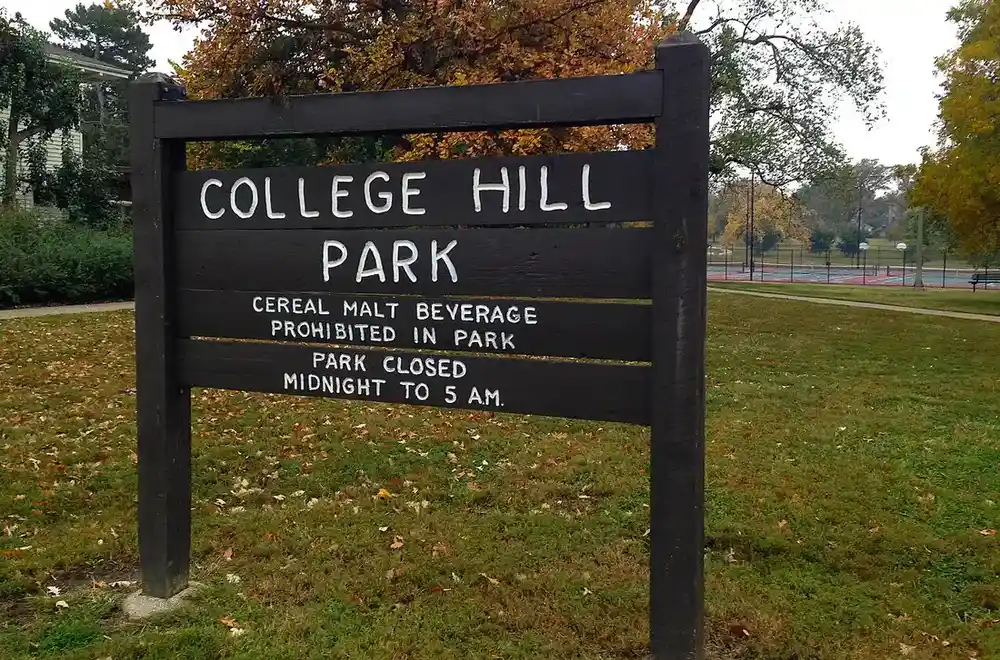
In the historic core and the east side - Riverside, College Hill, Eastborough, Downtown Wichita, Old Town and Delano, Midtown, South Wichita, Planeview, Oaklawn - the pipe stock runs from Wichita's oldest galvanized and clay to the boom-decade copper of the postwar subdivisions, and leak detection follows that record: century-old systems in the core, mid-life stock in the subdivisions, and hard water working on all of it at the same rate.

Across the east and west growth sides and the north side - East Wichita, Northeast Wichita, Uptown Wichita, West Wichita, Southwest Wichita, Auburn Hills and North Wichita, Benjamin Hills, Northwest Wichita, Derby, Andover, Haysville - sit the slab subdivisions of the 1970s onward, the growth-edge neighborhoods and the second-generation systems now reaching their first renewals, which together make this the steadiest leak detection territory in the city.

Beyond the city line, the same work runs in Clearwater, Mulvane, Rose Hill, Bel Aire, Park City, Valley Center, Kechi, Maize, Goddard, Newton, Hutchinson - railroad towns, fast-growing suburbs and county-seat communities where acreage wells, septic systems and small-city pipe add their own chapters. Every one of these area pages carries the local detail for leak detection in that community.

Coverage, In Full

Leak Detection runs across the whole service map: Riverside, College Hill and Eastborough; Downtown, Old Town, Delano and Midtown; East Wichita, the northeast growth edge and Uptown; South Wichita, Planeview and Oaklawn; the west side, Southwest Wichita and Auburn Hills; North Wichita, Benjamin Hills and Northwest Wichita; and beyond the city in Derby, Andover, Haysville, Clearwater, Mulvane, Rose Hill, Bel Aire, Park City, Valley Center, Kechi, Maize, Goddard, Newton and Hutchinson. One call covers all of it - the local pages above carry the detail for each. If your street is not named here, call anyway: routes grow with demand, and most Sedgwick County addresses are already within reach of a scheduled run.

From the Wichita Plumbing Guides

Slab Leak Signs: Reading the Leak Under the Floor

A slab leak announces itself indirectly: a meter that moves with everything off, a warm spot on the floor from a hot line, a bill climbing without a cause, flooring that buckles, softens or smells of mildew. The meter test is the owner's proof: shut everything down, read the meter, wait, read again. Movement is loss, and its pace sizes the leak before any professional instrument comes out of the truck.

Read the Guide

Thinking Tankless? The Wichita Guide to Flow, Scale and Fit

Tankless units heat water as it flows, so their limit is rate, not volume: the sizing question is how many fixtures run at once in January, when inlet water is coldest and every unit's capacity is at its yearly low. Wichita's hard water is the format's local tax: heat exchangers scale, capacity fades, and the annual descale - with service valves fitted at installation - is the non-negotiable rent on the technology's long life.

Read the Guide

What Drives the Cost of a Plumber in Wichita?

Plumbing prices are scope wearing a number: the same named job - a leak, a clog, a heater - spans a wide range because the underlying situations differ in access, condition, footage and code work. The factors that move a Wichita quote are knowable in advance: what failed and in what material, how reachable it is, how much of the system the honest scope includes, and what the ground, the slab or the wall asks of the crew.

Read the Guide

Leak Detection Questions

What does the water meter test actually prove?

That the system is losing water, and roughly how fast - with every fixture off, any movement is loss. Timed readings size it: a fast spin is a broken line's signature; a slow creep, a weep's. It does not locate the leak; it converts a suspicion into a fact worth locating.

Can irrigation systems hide a leak from the house tests?

They are their own territory and a favorite hiding place - a lateral irrigation leak runs only when its zone runs, and the house side tests clean. A complete detection isolates the irrigation as its own section, which is why 'the house is tight' and 'the bill is still wrong' can both be true.

Why did my leak only show up in summer?

It may not have started in summer - dry clay simply stops confessing. In wet seasons a service leak surfaces; in drought the same water vanishes into shrunken soil, and the bill becomes the only witness. Summer discoveries are often spring leaks read late, which is an argument for meter checks in every season.

What affects the cost of leak detection in Wichita?

The system's size and complexity, how many territories must be isolated, the depth and material of the suspect lines, and the ground's acoustic mood. A ranch slab with one bathroom group and a two-story with irrigation are different investigations - both begin with the same meter.

How does leak detection work without digging in Wichita?

By sequence: pressure and meter tests first isolate which part of the system is losing water; then acoustic instruments listen along the line's path for the hiss a pressurized leak makes, strongest at its source; moisture and temperature reads confirm. The dig, when it comes, is the verification of a conclusion the instruments already reached - one opening, at the mark.

My meter moves but I cannot find water anywhere in Wichita. Where is it going?

Into the ground or the slab, most likely - a service line leaking into clay can swallow its whole output without a surface sign for months, and a slab leak drains into the pour's base. The meter's movement with everything off is proof enough to start; the detection's job is to give that proof an address.

Is a slab leak always repaired by breaking the floor in Wichita?

The opened-spot repair is one answer, and on a sound line with a single failure it is often the right one. Where the line's condition at the opening suggests a run at its end - repeated leaks, corroded stock - rerouting the line overhead or around the slab can be the wiser arithmetic. The detection report plus the opened section's evidence make that call honestly.

How accurate is acoustic detection in Wichita's clay soil?

Good, with the ground's cooperation honestly graded. Wet clay conducts leak noise kindly; very dry soil and deep lines mute it, and a careful detection says so and leans harder on pressure isolation and tracing. Beware any mark offered without its evidence - in detection, the confidence statement is part of the product.

Please note: Wichita Plumbing Pros is an independent directory and referral service, not a plumbing contractor. The professionals reachable through this site are independent businesses; any agreement for work is between you and the professional you engage. Service information on this site is general educational material - the scope of any real plumbing work is set by an on-site inspection.

A Burst Pipe, a Backed-Up Drain or a Water Heater Gone Cold?

One call connects you with a plumbing professional serving Wichita and the surrounding communities - diagnosis, repair and a clear scope before work starts.

📞 Call Now
📞 Call Now