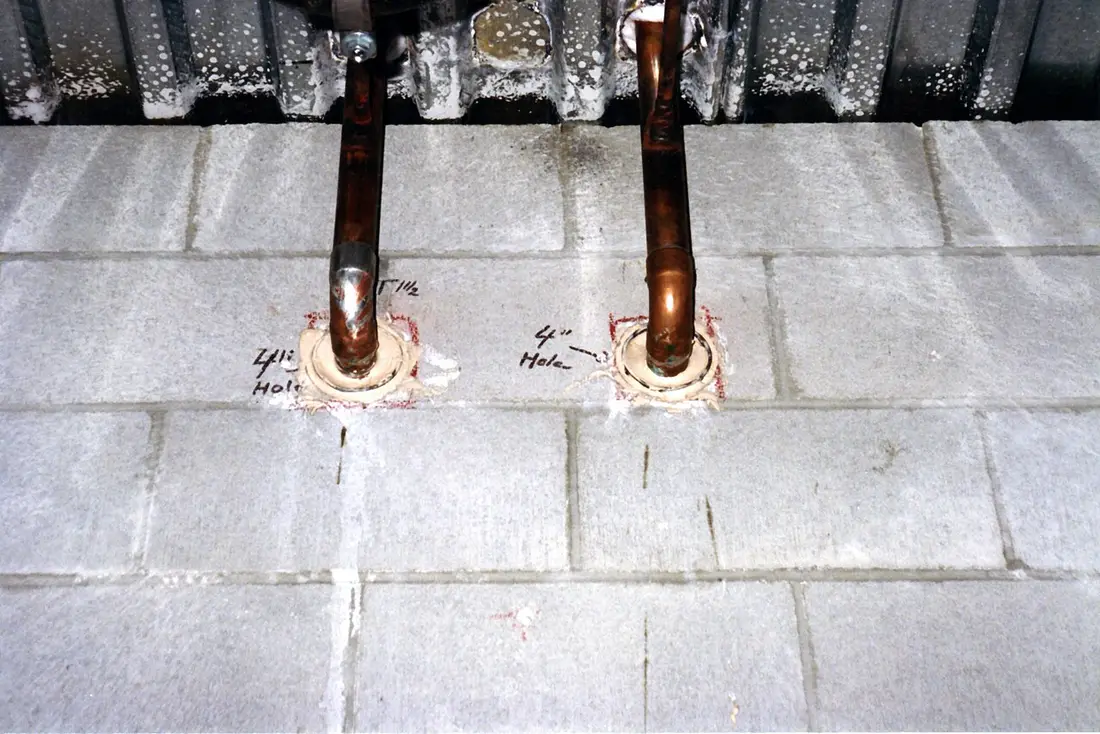
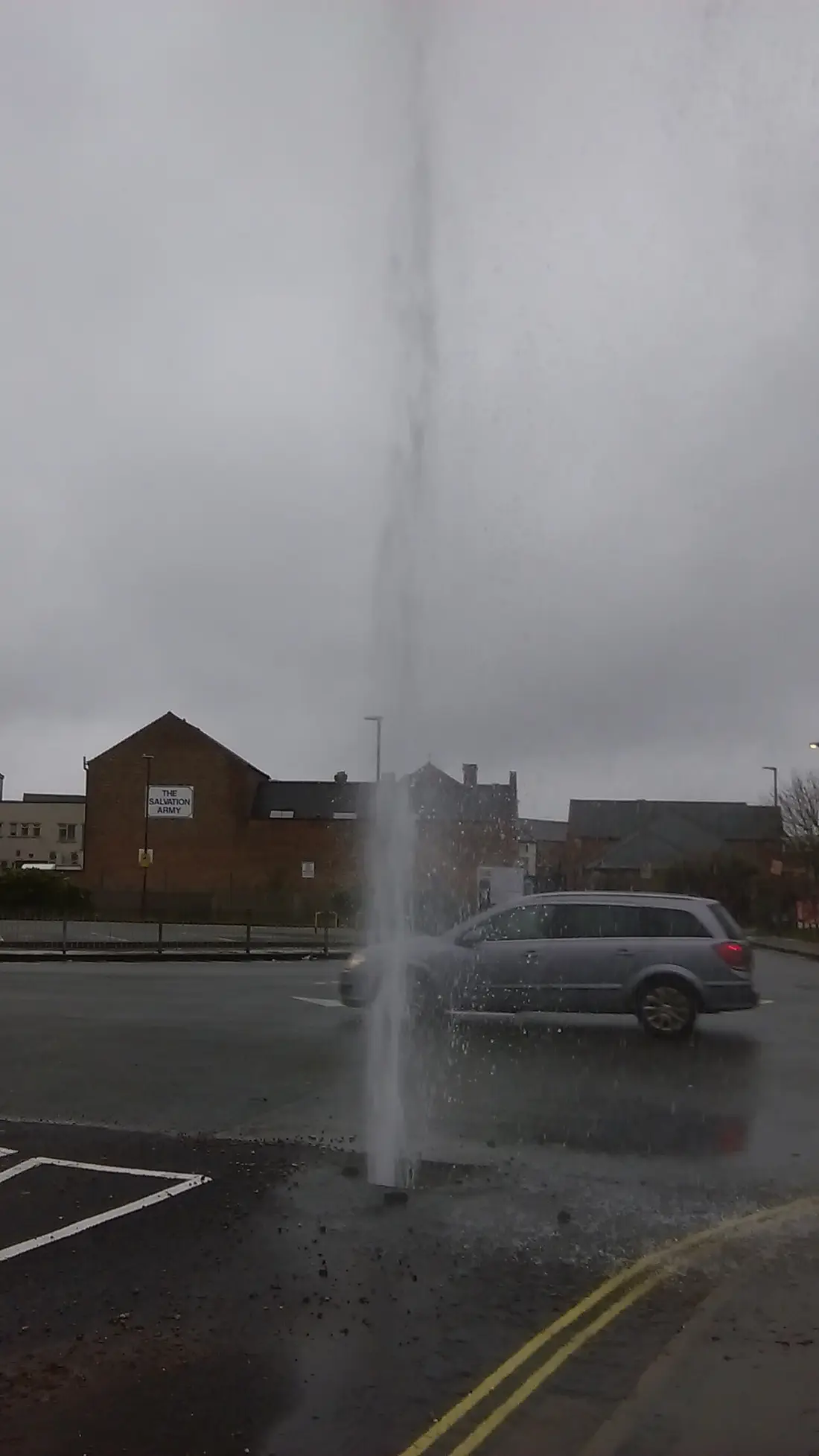
Wichita's winter risk is the swing: Arctic air drops temperatures into the teens and single digits, then releases - and pipes burst at the freeze but announce themselves at the thaw, when the ice plug melts and the split section pours.
Problem: Wichita's winter risk is the swing: Arctic air drops temperatures into the teens and single digits, then releases - and pipes burst at the freeze but announce themselves at the thaw, when the ice plug melts and the split section pours.
Solution: Prevention is a map: the vulnerable runs are exterior walls, crawlspaces, garages, attics and the hose bibs outside - insulated, sealed and, on the coldest nights, dripped and cabinet-warmed before the front arrives.
When to call: If a pipe freezes, close nothing and panic less: keep the faucet open, warm the run gently from the faucet back, never use open flame, and know your main shutoff before the thaw - the burst reveals itself then.
The Kansas winter does not freeze pipes the way a Minnesota winter does - slowly, predictably, all season. It freezes them in ambush: a front drops the temperature twenty degrees by morning, the wind strips the house's warmth from its north and west faces, and the pipe in the crawlspace or the garage wall crosses the line in a single night. Then the sun comes out, the city celebrates - and the split pipe, thawed, begins to pour into the wall. This guide is about that whole cycle: preventing the freeze, surviving the thaw, and reading what the event taught you about your house.
The Wichita Angle
Start with the water itself. Wichita's municipal supply - drawn from Cheney Reservoir and the Equus Beds aquifer - arrives hard, carrying a mineral load that precipitates out wherever water is heated or left standing. Scale builds inside water heaters, narrows old galvanized lines, crusts faucet aerators and shower heads, and shortens the life of every appliance valve in the house. Plumbing in Wichita is therefore never just about pipes; it is about what the water does to them, year after year.
Why pipes burst - the part most people get backwards
The ice itself is rarely what splits the pipe. Water freezing expands in place harmlessly along most of a run; the damage happens at the plug: ice seals a section, more water freezes behind it, and the pressure between the plug and the closed faucet climbs until the pipe wall fails - often yards from the ice, in a section with no ice in it at all. This is why a pipe can burst in a spot that never felt cold, and why the leak's address and the freeze's address are cousins, not twins.
It is also why the burst announces at the thaw. While the plug holds, the split section is silent - frozen systems do not leak. The moment warmth returns, the plug melts, pressure normalizes, and the split becomes a fountain into whatever cavity hosts it. Wichita's swing climate runs this sequence efficiently: deep freeze, bright thaw, soaked insulation. The homeowner's leverage sits at both ends - preventing the plug, and being home, awake and shutoff-ready when the thaw arrives.
The vulnerability map of a Wichita house
Walk the house with a cold eye and the map draws itself. The hose bibs outside, whose interior runs pass through the rim joist, freeze first and oftenest - their cure is a shutoff and a drained line, or a frost-proof sillcock properly installed. Crawlspace runs live in the house's coldest air, especially at foundation vents left open to the wind. Garage walls share the chill of an unheated box. Exterior-wall kitchen and bath runs - the sink on the north wall is a Kansas classic - sit inches from the cold inside a cabinet that seals them off from the house's warmth.
The attic is the map's dangerous corner: a pipe that bursts there rains through ceilings into the whole floor plan. Slab homes trade some of these risks for others - the slab protects its lines with the earth's warmth, while the attic and the garage carry the exposure. Every house's map is particular, which is why the preventive work starts with the walk: you are looking for water running through any space you would not sit in, in January, in shirtsleeves.
PROBLEM
→
SOLUTION
Thawing, bursting, and the hour that decides the bill
A frozen pipe with no burst yet is a thawing problem: open the faucet it feeds - this relieves the pressure that does the bursting - and warm the run gradually from the faucet toward the freeze with a hair dryer, a heat gun on its gentlest setting, towels soaked in warm water, or a space heater aimed from a safe distance. Open flame is forbidden by physics and by every fire department in Kansas: it boils the water in the pipe, torches the wall's hidden side, and converts a plumbing problem into a fire problem mid-thaw.
If a pipe has burst, the sequence collapses to three moves: close the main shutoff, open faucets to drain the pressure, and call - in that order, before photographs, before mops. The water's damage curve is measured in minutes; drywall and flooring forgive a stopped leak and punish a flowing one mercilessly. Afterward, the event becomes a teacher: the split section's location, read against the vulnerability map, names the insulation and sealing work that keeps the next front from repeating the lesson.
The Freeze Your House Remembers: Reading Old Scars
Houses that have frozen before keep the minutes in their walls: the patched drywall rectangle in the garage, the mismatched paint over a crawlspace ceiling, the insulation stuffed hopefully around a rim-joist run. Read them before winter and they mark the vulnerability map with the authority of experience - the exact runs where this house, in its actual microclimate, has already crossed the line once. A house's own freeze history outranks any general guide, including this one.
It also ranks the fixes. The run that froze in a mild winter is the emergency; the run that froze only in the decade's worst outbreak is the watch list. Owners who grade their insulation work by that history spend their autumn Saturdays where their own January will collect, rather than armoring the whole house evenly against a cold that arrives selectively.
The Thaw Day Household: A Choreography
Thaw day rewards the household that treats it as an appointment: someone home during the warm-up hours, faucets tested one system at a time, ears open for the hiss in the wall, the meter checked with everything at rest. The burst pipe's damage is a function of minutes of flow, and the choreography's whole purpose is to make those minutes few. The difference between the houses that mop and the houses that file claims is usually not the freeze - it is whether anyone was listening when the plug let go.
The same choreography covers the aftermath: photographs before cleanup, the failed section saved or photographed for the record, and the insulation gap that caused it named and scheduled. A burst pipe is expensive tuition; the choreography is how a household collects the education it paid for instead of merely the invoice.
Myth vs Fact
The Myth
Pipes burst because ice expands inside them and splits the wall open at the freeze. It is the intuitive picture - ice swelling against copper - and it survives because the burst is discovered cold.
VS
The Fact
The burst is a pressure event, and it usually speaks at the thaw. Ice plugs the line; freezing behind the plug pressurizes the trapped water until a section - often a warm, ice-free one - fails. The leak flows when the plug melts, which is why thaw day, not freeze night, is when the damage is done and caught.
The Related Service, In Depth
A repipe is best understood as the house changing its circulatory system while continuing to live its life - and the modern staging that makes that possible is a genuine craft achievement worth appreciating. Lines roughed in alongside the working system, changeovers measured in hours, walls opened at points rather than in swaths: the household's experience of a repipe is now closer to a renovation of one room than to the siege its reputation describes.
That is the service side of this guide's subject. When you are ready, the Pipe Repair & Repiping page carries the process, the coverage by neighborhood and the number to call.
The Process, Step by Step
Walk the map in autumn
Identify every run through crawlspace, garage, attic and exterior wall, plus both hose bibs. The list is the work list.
Insulate and seal
Foam sleeves or better on the vulnerable runs; seal the crawlspace vents and the rim-joist gaps where wind strips the pipe's air. Cold arrives through moving air first.
Set the cold-night protocol
On the forecast's worst nights: cabinets open on exterior walls, a pencil-thin drip at the far faucet, the thermostat held steady - the small liturgy that beats the front.
Rehearse the thaw
Know the main shutoff's location and keep its path clear; after any freeze event, walk the house as temperatures rise, listening for the hiss that means a plug let go somewhere.
Prevention Checklist
Drain and shut off the hose bibs before the first hard freeze - they are the county's commonest burst, every single winter.
Keep foundation vents closed through the cold months; the crawlspace's job in winter is stillness, not ventilation.
Hold the thermostat's line overnight during fronts - the saved heating is repaid, with interest, by the burst it was preventing.
Insulate the garage's shared wall runs and the attic's exposed footage during any remodel that opens them; access is the expensive part and it is already paid.
After any thaw that follows a deep freeze, check the meter for motion with everything off - the leak you hear about from the meter is the least damaging version of it.
A Field Checklist for Your Own Home
Walk the vulnerability map every autumn
crawlspace, garage, attic, exterior walls, both hose bibs.
Shut off and drain the hose bibs before the first hard freeze, without exception.
Set the cold-night liturgy in advance
cabinets open, far faucet dripping, thermostat steady.
Stage the thaw response
shutoff location known, path clear, one adult assigned to listen on thaw day.
What the Paperwork Should Show
A house's freeze exposure can be roughly scored: each exterior-wall wet fixture, each crawlspace run, each uninsulated attic foot adds a point, and the total predicts the household's January better than the forecast does. Owners who score their houses in autumn stop being surprised by which pipe the front chose - it is almost always the map's highest scorer, and it was addressable in October at insulation prices.
The scoring also exposes the one upgrade with outsized returns: the freeze alarm and the automatic shutoff, which convert an unobserved burst into a bounded one. For houses that empty during winter travel, that conversion is the difference between a plumbing event and an insurance event, and it is bought once.
How a Professional Works This Problem
A professional freeze-proofing visit walks the house's vulnerability map with the owner's own freeze history as its guide: insulation specified by run, not by the bag; rim joists and crawlspace vents sealed against the wind's stripping; hose bibs converted or isolated; attic runs given their designed protection. The deliverable is a house whose cold spots have been retired in order of their demonstrated risk - and a thaw-day plan the household has actually rehearsed.
Mistakes That Make It Worse
Insulating the pipe and leaving the wind path open - moving air strips more heat than still cold ever will.
Thawing with a torch, ever, for any reason, at any distance.
Dripping every faucet in the house and relieving none of the pressure where the vulnerable run actually lives.
Going to bed on thaw night without the meter check - the plug lets go on its schedule, not yours.
The Bottom Line
Kansas freezes ambush houses, but they ambush them at known addresses, on a published schedule of fronts, with a thaw that announces itself in the forecast. The defense is correspondingly unglamorous: a map walked in autumn, a liturgy kept on the cold nights, an ear lent on thaw day. Do those three and the winter's worst story becomes the one you tell about the neighbors' house.
The decision turns on one distinction: parts fail and are repaired; vessels fail and are replaced. A thermostat, element, valve or anode is a part. A leaking seam or tank bottom is the vessel announcing itself.
Tankless units heat water as it flows, so their limit is rate, not volume: the sizing question is how many fixtures run at once in January, when inlet water is coldest and every unit's capacity is at its yearly low.
How cold does it have to be for pipes to freeze in Wichita?
There is no single number, because the pipe's exposure decides: a run in a wind-washed crawlspace or an uninsulated north wall can freeze in the high teens, especially across a long night, while an interior run rides out far colder weather unbothered. Wind and duration matter as much as the thermometer - which is why the vulnerability map, not the forecast alone, sets the house's protocol.
Should I drip faucets, and how much?
Yes, on the nights your map says so: a steady drip - pencil-thin stream's smaller sibling - at the faucet farthest along a vulnerable run keeps water moving and relieves pressure, the two things that prevent the plug from becoming a burst. Relieving pressure is the deeper magic: even if ice forms, an open path gives its expansion somewhere to go.
A pipe froze but nothing burst. Am I safe?
Probably, and verify: thaw it gently, then watch that run and read the meter over the following days with everything off. The split, when it exists, leaks from the first thaw; a dry run and a still meter after the thaw are the all-clear. Then insulate that run - it has introduced itself, and it will be back next winter.
My pipe burst while I was away. How do I limit this next time?
The away protocol is a shorter, stronger list: water shut off at the main for absences spanning a forecast front, the house held at a sane minimum temperature, and a person - neighbor, service, house-sitter - walking it after the thaw. For long winter absences in this climate, a drained system is the only protocol that cannot fail.
Please note: Wichita Plumbing Pros is an independent directory and referral service, not a plumbing contractor. The professionals reachable through this site are independent businesses; any agreement for work is between you and the professional you engage. Service information on this site is general educational material - the scope of any real plumbing work is set by an on-site inspection.
A Burst Pipe, a Backed-Up Drain or a Water Heater Gone Cold?
One call connects you with a plumbing professional serving Wichita and the surrounding communities - diagnosis, repair and a clear scope before work starts.