Wichita's supply, drawn from Cheney Reservoir and the Equus Beds aquifer, carries a real mineral load - the city's water is hard, and every heated or slowed drop leaves a deposit behind in your plumbing.
Problem: Wichita's supply, drawn from Cheney Reservoir and the Equus Beds aquifer, carries a real mineral load - the city's water is hard, and every heated or slowed drop leaves a deposit behind in your plumbing.
Solution: Hard water's damage is cumulative and mechanical: scale insulates water-heater elements and burners, crusts toilet jets and flappers, narrows aerators, and shortens the life of every seal and valve it bathes.
When to call: The responses that work are boring and calendared: flush the water heater, renew anodes, descale tankless units yearly, clean aerators and showerheads, and consider softening when the whole system's evidence argues for it.
Every Wichita homeowner has met the evidence: the white crust on the faucet, the kettle's fur, the showerhead whose spray arrives at angles. Hard water is not a defect in the supply - the city's water is safe and well managed - but it is a mineral load with mechanical consequences, and the plumbing in a Wichita home spends its entire life negotiating with those consequences. This guide explains what is in the water, what it does part by part, and which responses genuinely change the outcome.
The Wichita Angle
The ground is the second author of Wichita plumbing. Much of Sedgwick County sits on expansive clay that swells when wet and shrinks in drought, and that slow breathing moves everything buried in it: sewer laterals sag and separate at the joints, service lines flex at their fittings, and slab foundations transmit the motion to the pipes inside them. Add the freeze-thaw winters, when shallow lines and unheated crawl spaces meet single-digit nights, and the county's buried plumbing works harder than the plumbing itself ever planned to.
Where Wichita's water comes from, and what rides in it
Wichita drinks from two sources: Cheney Reservoir, northwest of the city, and the Equus Beds aquifer to the west - a groundwater system the city actively recharges to keep sustainable. Both are generous and both are mineralized. Water that has traveled through Kansas geology collects calcium and magnesium on the way, and it arrives at your meter carrying them invisibly, in solution. Nothing about this is alarming for health; the minerals are the same ones sold as supplements. The plumbing, however, experiences them as a lifelong deposition event.
Hardness becomes visible where water is heated, evaporated or slowed. Heat is the great precipitant: minerals that stay dissolved in cold water come out of solution as water warms, which is why the water heater, the kettle and the dishwasher's element wear the thickest crust. Evaporation leaves its rings at faucet tips and shower glass. Slow water - the tank of a toilet, the trap's surface - grows its deposits patiently. Every fixture in the house sits somewhere on that map, and its maintenance interval is set by its position on it.
The damage ledger, part by part
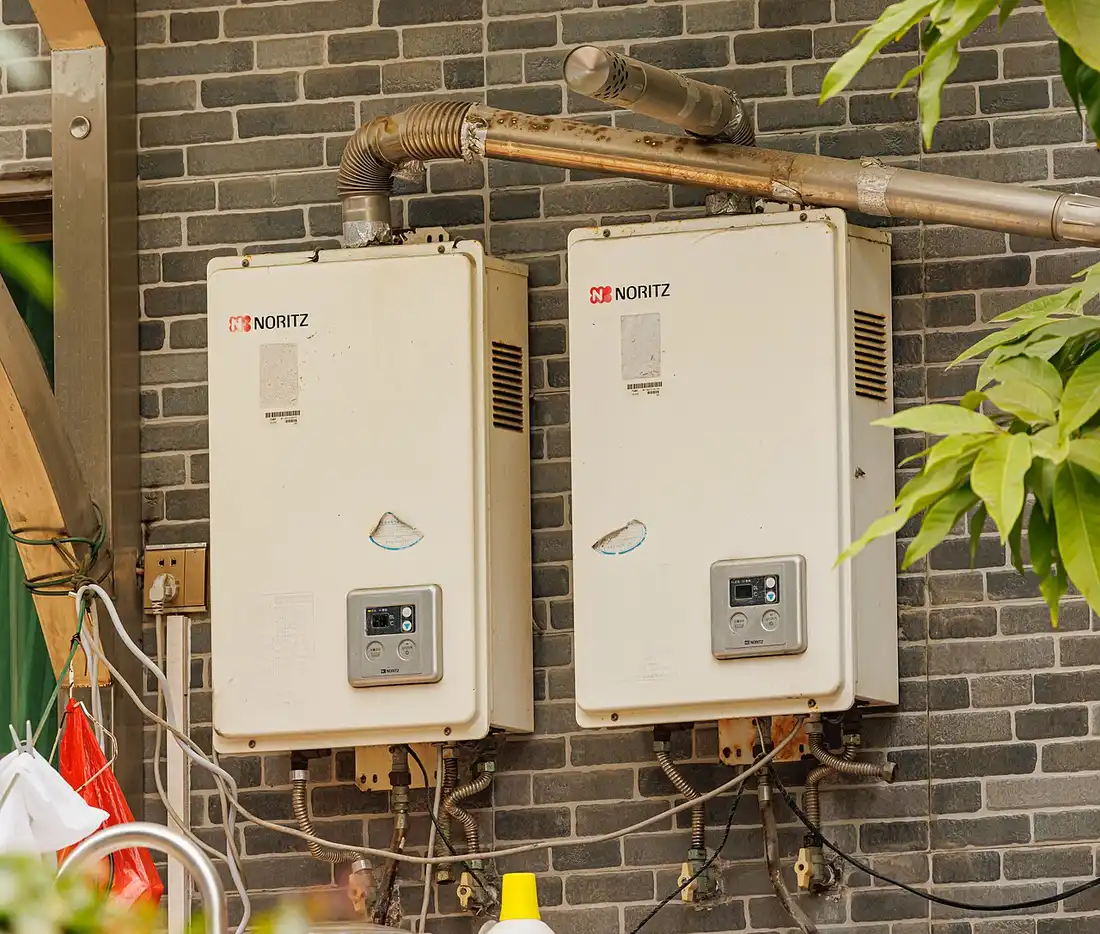
The water heater pays the largest bill, in two currencies. Sediment settling on a gas tank's floor insulates the burner from the water, so the unit fires longer to heat less, and the overheated sediment bakes into a rumbling layer that stresses the vessel's lining; on electric elements, scale crusts the element itself until it overheats and fails. Above the waterline, the anode rod - installed to be consumed instead of the tank - is eaten faster by mineral-rich water, and its early exhaustion is the difference between a tank that serves its full range and one that rusts through mid-life.
The smaller parts pay in smaller coin, continuously. Toilet fill valves grit their seals until they weep; flappers stiffen and flush-valve seats crust until the toilet runs in phantom cycles. Aerators and showerheads narrow until pressure seems to fall - a complaint that is very often mineral, not municipal. Dishwasher and washing-machine valves, faucet cartridges and the tankless heat exchanger all keep the same account. None of it is dramatic, and all of it is scheduled: hard water does not break plumbing so much as it ages it ahead of its years.
PROBLEM
→
SOLUTION
What actually helps, in order of leverage
The water heater flush is the highest-leverage habit in this guide: draining the sediment while it is still mobile resets the tank's efficiency and its stress levels, and pairing it with an anode inspection converts the two largest hard-water costs into a calendar entry. Tankless owners hold the equivalent appointment - the annual descale - and in this water it is not an upsell but the appliance's stated condition of a long life.
Whole-house softening is the structural answer, and it deserves an honest framing: a softener trades the mineral load for a maintenance rhythm of its own - salt, regeneration, a unit to service - and delivers water that stops depositing everywhere at once. Houses whose evidence is system-wide (repeated valve failures, scaled everything, a tankless to protect) make the strongest case. Filtration is a different tool - it addresses taste and sediment, not hardness - and point-of-use answers protect single fixtures. The right scale of response is the one matched to where your house's evidence actually concentrates.
The Rooms Where Hard Water Confesses First
Read a Wichita house by its mineral handwriting and the rooms rank themselves. The water heater closet keeps the deepest record - sediment by the bucket at the first flush of a neglected tank. The bathrooms testify weekly: fill valves that sigh, flappers that crust, showerheads striping their spray. The kitchen's evidence is daily and small - the kettle's fur, the dishwasher's filmed glass, the faucet aerator's weakening stream. Each room is a gauge on the same tank, and the owner who learns the gauges reads the system's mineral pressure without a single test kit.
This is also why 'my neighbor has no problems' is not evidence about your water. The same street's houses keep different ledgers because their plumbing keeps different rhythms - one flushes its tank religiously, one has not opened the drain valve since the Bush administration. Hard water is the constant; maintenance is the variable, and the rooms report the variable, not the constant.
Why Flushing Works - and What It Cannot Do
The flush works because sediment is mobile before it is masonry. Suspended in the tank's bottom water, the mineral grit leaves with a vigorous drain; left through heat cycles, it bakes, sinters and bonds to the vessel's floor, at which point draining removes the loose fraction and the baked layer stays as permanent insulation. The same appointment logic applies to the anode: consumed on schedule, replaced as a part; consumed past schedule, the tank becomes the anode. Both are calendar items because both processes are calendar processes.
What flushing cannot do is rewind the system: it does not un-narrow a galvanized pipe, un-pit a copper line or un-crust a showerhead that needs its vinegar bath. Owners who expect the flush to be a general absolution under-maintain everything else. The correct mental model is a ledger of separate accounts - tank, valves, fixtures, pipes - each with its own mineral rhythm and its own small ritual, none transferable to another.
Myth vs Fact
The Myth
Hard water is a cosmetic nuisance - spots on glasses, nothing structural. The spots are the visible fraction, so owners file the whole subject under housekeeping.
VS
The Fact
Hard water is a mechanical aging process with a schedule. Sediment insulates heaters, anodes deplete early, seals grit and jets crust. In Wichita the difference between a maintained tank and a neglected one is measured in years of appliance life - cosmetics are merely how the process introduces itself.
The Related Service, In Depth
A water heater's failures are almost never sudden in origin - they are the harvest of small accumulated neglects: the anode consumed a year past its watch, the flush skipped until the sediment insulated the burner, the drip at the union read as character. Repair work at its best resets that clock rather than merely silencing the symptom, which is why the good repair visit always includes the anode, the pan and the valve in its survey.
That is the service side of this guide's subject. When you are ready, the Water Heater Repair page carries the process, the coverage by neighborhood and the number to call.
The Process, Step by Step
Test before you treat
A hardness test - strip or lab - puts a number on your water instead of a vibe. The number decides whether you are maintaining against ordinary hard water or arguing for treatment.
Flush the heater, check the anode
Drain the tank's sediment on the manufacturer's rhythm and have the anode's remaining life read at the same visit. Together they are the tank's whole defense.
Walk the small parts
Clean aerators and showerheads in vinegar; listen for the toilet's phantom refill; feel faucet handles for grit. The small parts report the system's mineral pressure first.
Match the response to the evidence
If the evidence is one appliance, maintain the appliance. If it is the whole house, price the structural answer - and keep the calendar either way, because softened or not, Wichita water asks for rhythm.
Prevention Checklist
Flush the water heater on schedule - sediment removed while mobile is maintenance; sediment baked hard is damage.
Renew the anode rod when inspection says it is spent; it is the hardest-working protection a tank can hold.
Descale tankless units yearly in this water - no exceptions written in fine print.
Clean aerators and showerheads at the first angled spray; they are the system's pressure gauges.
Keep a simple water file: hardness number, flush dates, anode checks. The file turns mineral guesswork into management.
A Field Checklist for Your Own Home
Test the supply's hardness once and file the number; every later decision reads against it.
Calendar the water heater flush and the anode check as one appointment, on the manufacturer's rhythm.
Give aerators and showerheads a vinegar bath at the first angled or weakening spray.
Match any treatment to the evidence's address
appliance, room or whole house - never larger than the ledger demands.
What the Paperwork Should Show
The mineral ledger's total is best seen across a year: a tank's sediment measured by the bucket at flush time, a toilet's parts renewed on their crust schedule, an exchanger's descale restoring its first-year flow. Homes that track the year's small numbers discover that hard water's cost is not any single invoice but the sum of accelerations - and that the counters, being calendared, are cheaper in rhythm than in reaction.
The same year-view governs the softening decision. One scaled appliance is a maintenance story; the same story told simultaneously by the heater, the dishwasher, the toilets and the tankless is a system asking for the structural answer. Count the story's tellers before pricing its ending.
How a Professional Works This Problem
A professional hard-water assessment puts numbers on the whole ledger in one visit: the supply's hardness tested, the heater's sediment and anode read, the tankless exchanger's scale graded, and the house's mineral pressure mapped fixture by fixture. The deliverable is a rhythm, not a product - the flush and descale calendar, the anode's date, the small parts on their intervals - and, where the evidence is system-wide, an honestly scoped softening conversation with its maintenance stated up front.
Mistakes That Make It Worse
Flushing the tank religiously while the anode dies unexamined - half a defense at full confidence.
Buying filtration to fight hardness; filters address sediment and taste, and the scale forms anyway.
Expecting a softener to repair damage already done - it prevents the future ledger, not the past one.
Reading low pressure as the city's problem before cleaning an aerator.
The Bottom Line
Hard water is Wichita's permanent house guest: it arrives with every gallon and it never moves out. The households that stop resenting it and start managing it - a tested number, a flush on the calendar, an anode renewed on schedule - find that the guest's demands are small, predictable and entirely affordable in rhythm. The mineral is forever; the damage is optional, and the calendar is the whole difference.
Older Wichita homes drain through clay tile or cast-iron laterals whose sections are sound but whose joints - opened by decades of expansive-clay movement - admit the roots that do the visible damage.
Wichita's winter risk is the swing: Arctic air drops temperatures into the teens and single digits, then releases - and pipes burst at the freeze but announce themselves at the thaw, when the ice plug melts and the split section pours.
Yes - the municipal supply is treated, tested and regulated, and its hardness is a plumbing and aesthetics matter, not a health one. The minerals are calcium and magnesium; the city's published water quality reports cover the full picture for anyone who wants the primary source.
Does hard water really shorten a water heater's life?
Measurably, through two mechanisms: sediment insulating the heat source until the vessel is stressed and efficiency falls, and the anode rod - the tank's sacrificial protection - being consumed faster, after which the tank itself corrodes. Flushing and anode renewal are the specific counters, which is why maintained tanks in the same water outlive neglected ones by years.
Will a water softener solve everything?
It solves deposition, which is most of the ledger: scale stops forming, soaps perform, and appliances stop aging early. It adds its own rhythm - salt and regeneration - and it does not repair damage already done. For a house whose evidence is system-wide it is the structural fix; for a house with one complaining appliance it can be more machinery than the problem needs.
Why does my water pressure seem lower than it used to be?
Interrogate the minerals before the municipality: aerators and showerheads narrow with crust, fill valves grit, and old galvanized pipe narrows from inside with rust and scale together. A pressure reading at an outside spigot separates the house's narrowing from the street's supply - a five-minute test that decides which conversation you are actually having.
Please note: Wichita Plumbing Pros is an independent directory and referral service, not a plumbing contractor. The professionals reachable through this site are independent businesses; any agreement for work is between you and the professional you engage. Service information on this site is general educational material - the scope of any real plumbing work is set by an on-site inspection.
A Burst Pipe, a Backed-Up Drain or a Water Heater Gone Cold?
One call connects you with a plumbing professional serving Wichita and the surrounding communities - diagnosis, repair and a clear scope before work starts.